
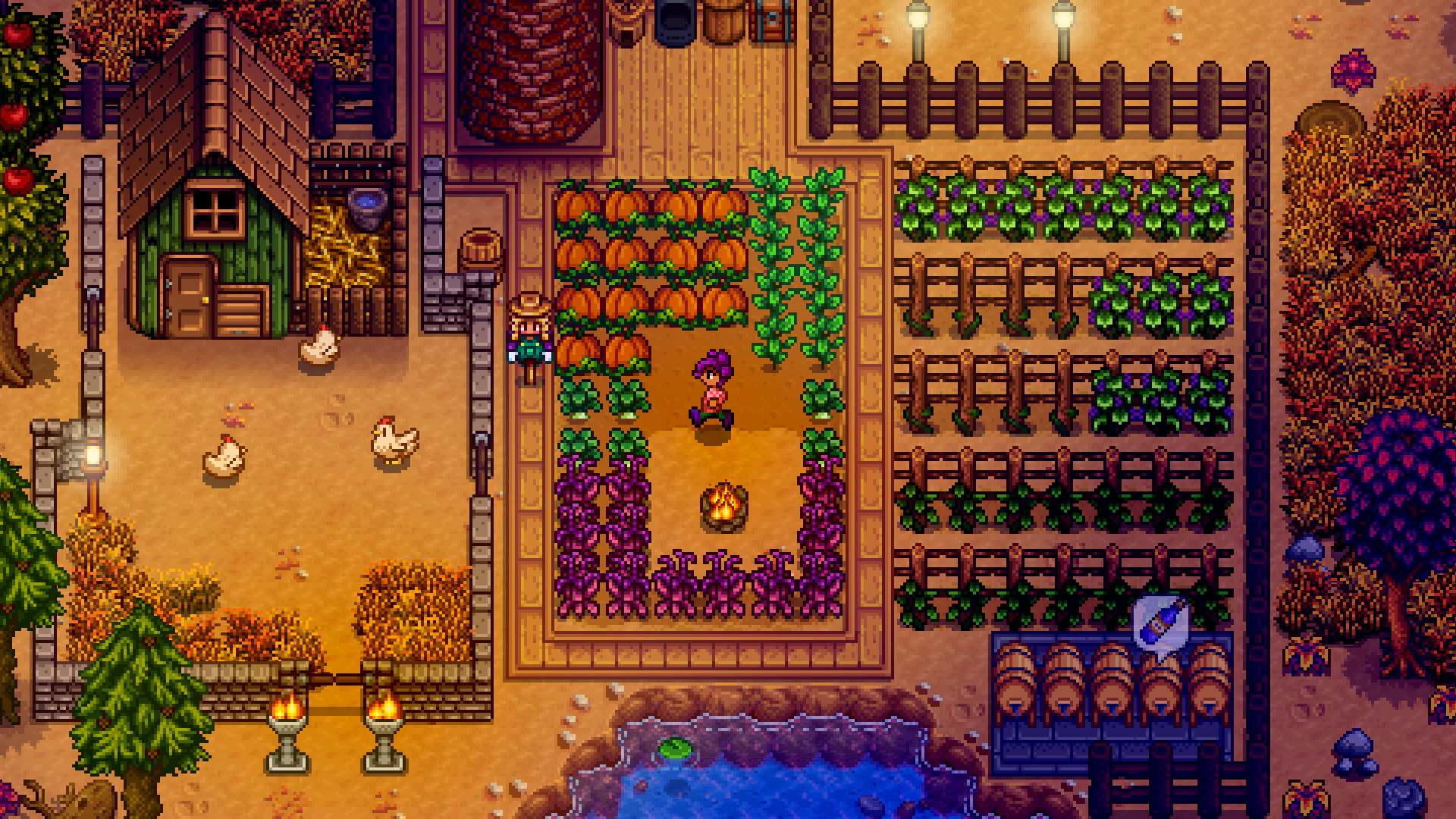
A basic Coop costs 4,000g, 300 wood and 100 stone, and houses four animals. A chicken costs 800g. Feed coop animals with accessible outdoor grass or hay on the feeding bench. A silo stores hay; it does not give a basic Coop the Deluxe Coop’s automatic-feeding system.[1][2][3][4]

On this page
Prepare housing and a food reserve
| Compare | Gold and materials | What it provides |
|---|---|---|
| Basic Coop | 4,000g + 300 wood + 100 stone[1] | Space for 4 animals; hopper and feeding bench[1] |
| Chicken | 800g each[2] | A coop animal that can produce eggs when mature and fed[2] |
| Silo | 100g + 100 stone + 10 clay + 5 copper bars[4] | Storage for up to 240 hay[4] |
Ask Robin at the Carpenter’s Shop for the buildings. The silo takes two days to build, so prepare it before depending on stored feed. Chickens are purchased from Marnie; do not spend the entire budget on the empty building.[1][4][2]
Meadowlands Farm starts with a Coop and two chickens. Check what your save already provides before buying a second building or treating the construction budget as a mandatory first expense.[1][2]
Check food where the chicken can use it
- Check the day’s food
Farm animals use one feeding portion on ordinary days. When they can go outside and find grass they can graze; rain and winter keep them indoors.[3]
- Place hay on the bench
For a basic Coop, take available hay from the hopper and put it on the feeding bench. Hay merely sitting in storage is not the same as a filled bench.[1][4]
- Verify the building upgrade
The autofeed system is a Deluxe Coop feature. Do not assume that buying a silo or a basic Coop activates it.[1]
If there are no eggs yet
A regularly fed chick matures after three nights; a mature, fed chicken produces an egg daily. Large eggs depend on further care and friendship, so they are not the guaranteed first product.[2]
First distinguish a young chicken from an adult. Then inspect its food and the conditions keeping it inside. Unfed farm animals stop producing until feeding resumes.[3]
Sources & verification
Facts last checked Oct 31, 2026. Checking a source does not change the page’s update date.
- Coop cost, capacity and feeding facilities Stardew Valley Wiki contributors · reference · Checked Oct 31, 2026
Community-maintained gameplay reference linked from the official game site. Playveylo has not independently playtested these mechanics; the source-check date is not a game build or release date.
Original language: en - Chickens: purchase and egg production Stardew Valley Wiki contributors · reference · Checked Oct 31, 2026
Community-maintained gameplay reference linked from the official game site. Playveylo has not independently playtested these mechanics; the source-check date is not a game build or release date.
Original language: en - Animal feeding and housing Stardew Valley Wiki contributors · reference · Checked Oct 31, 2026
Community-maintained gameplay reference linked from the official game site. Playveylo has not independently playtested these mechanics; the source-check date is not a game build or release date.
Original language: en - Silo construction and hay storage Stardew Valley Wiki contributors · reference · Checked Oct 31, 2026
Community-maintained gameplay reference linked from the official game site. Playveylo has not independently playtested these mechanics; the source-check date is not a game build or release date.
Original language: en
Page history
Published a source-linked base-game reference with original explanations. Exact installed build and independent gameplay testing are not established.
A source and a little context help us keep this guide useful.